We use cookies
They allow us to improve your browsing experience and analyze website traffic. Analytics cookies are used only with your consent. Read our Privacy Policy.
Last updated
Understanding Embryo Development During IVF
During IVF, eggs are fertilized in the laboratory and the resulting embryos are monitored as they develop. Some embryos continue to divide and reach the blastocyst stage, while others may slow down or stop developing before they are suitable for transfer or freezing. This is known as embryo developmental arrest, or embryo arrest.
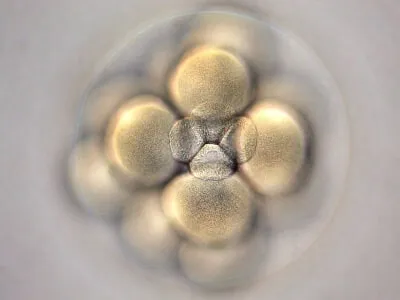
Embryo arrest can be disappointing, particularly when intended parents have invested considerable time, effort and hope in an IVF cycle. It is important to understand that not every fertilized egg is expected to develop into a transferable embryo.
After fertilization, the embryo begins dividing into cells. During the early cleavage stage, the number of cells increases. The embryo then develops through a compacted stage called the morula and may reach the blastocyst stage, usually around day 5 or 6, although some embryos develop later.
A blastocyst has a more organized structure, including an inner cell mass that contributes to fetal development and an outer trophectoderm layer that contributes to the placenta. The embryologist assesses development and quality using established laboratory criteria.
Embryo arrest means that an embryo has stopped progressing through the expected stages of development in the laboratory. It may occur during early cell division, during compaction or before the embryo reaches the blastocyst stage.
An embryo that arrests before it reaches a stage suitable for transfer or cryopreservation cannot be used in the planned way for that cycle. The embryology team documents the stage and observations when development stopped.
Embryo development depends on a complex interaction between the egg, sperm, genetic material and laboratory environment. Possible contributing factors include:
In an individual cycle, it is not always possible to identify one exact cause. Embryo arrest may reflect several interacting factors, and it should not automatically be attributed to one parent or one aspect of the treatment.
Not necessarily. Chromosomal or genetic abnormalities can contribute to developmental arrest, but embryo arrest alone does not establish a genetic diagnosis. The appearance and timing of arrest cannot reliably identify a specific chromosome or gene condition.
Genetic testing may be discussed in selected circumstances, but PGT is not a universal solution for embryo arrest and cannot guarantee that a future embryo will develop normally.
The embryologist reviews the fertilization and development records and explains how many eggs were retrieved, how many fertilized normally, how embryos progressed and at what stage development stopped.
The fertility specialist may then review the complete cycle, including ovarian stimulation, egg maturity, semen parameters, fertilization method, embryo development and any relevant medical history. If appropriate, the doctor may recommend additional testing or changes to a future treatment plan.
Yes. Embryo development can vary from one cycle to another, even for the same intended parents. A cycle in which embryos arrest does not, by itself, prove that future embryos will also arrest.
The fertility specialist may discuss whether any aspect of the treatment plan should be adjusted. Possible considerations depend on the findings and may include further review of sperm or egg factors, the stimulation protocol, fertilization approach or laboratory observations. There is no single intervention that can prevent embryo arrest in every case.
Embryo arrest takes place during embryo development in the laboratory, before a pregnancy is established in the uterus. Miscarriage is a pregnancy loss after implantation and the establishment of pregnancy. The two events occur at different stages and require different medical assessments.
We understand that an IVF cycle with no embryos available for transfer can be emotionally difficult. New Hope helps intended parents coordinate communication with the fertility clinic and understand the information provided by the embryology team.
The treating fertility specialist and embryologist are best placed to interpret the cycle results and discuss the options for any future treatment.
If you have experienced embryo arrest or have concerns about embryo development, contact New Hope to discuss how the clinic can review your records and explain the available next steps.
Thank you for your interest in New Hope. We’ll be happy to assist you with any questions you have about our services.
They allow us to improve your browsing experience and analyze website traffic. Analytics cookies are used only with your consent. Read our Privacy Policy.